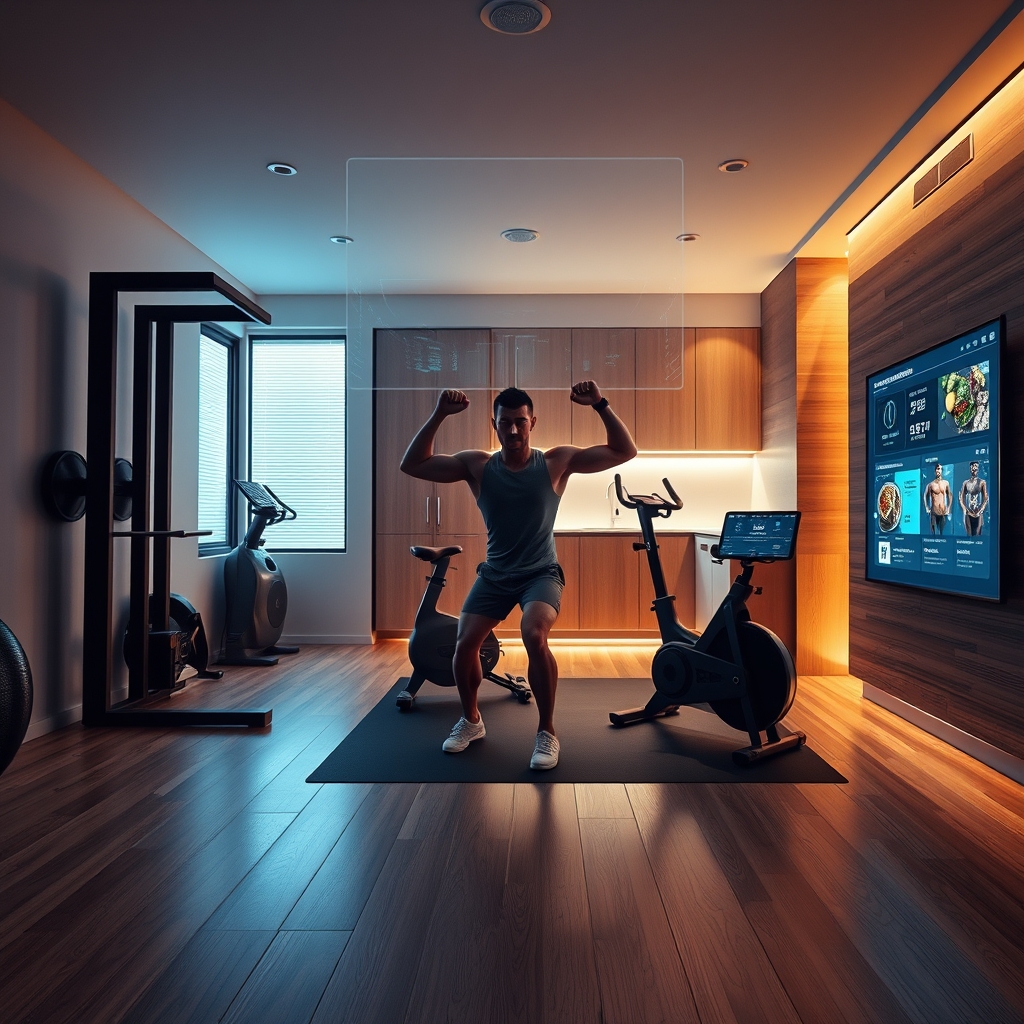
The Next Frontier: How AI-Powered Smart Home Gyms and Precision Nutrition Are Redefining Hyper-Specific Body Transformation
Imagine stepping into your home gym at 6 AM, greeted by an AI-powered system that already knows your fatigue levels, muscle recovery status, and even your mood. Before you even pick up a dumbbell, it adjusts the lighting, queues your personalized workout, and syncs with your smart nutrition app to suggest the perfect pre-workout meal. This isn’t a scene from a sci-fi movie—it’s the reality of fitness & gym culture in 2024, where artificial intelligence and smart tech are merging to create hyper-specific body transformations tailored just for you.
The Rise of AI in Smart Home Gym Integration
The days of one-size-fits-all workout plans are fading fast. Today, smart home gym integration is taking center stage, blending cutting-edge hardware with AI-driven software to deliver workouts that adapt in real time. Devices like Tonal, Mirror, and Peloton aren’t just fitness equipment; they’re intelligent ecosystems that learn from your performance, adjust resistance, and even correct your form using computer vision.
What makes these systems revolutionary is their ability to analyze data from every rep, set, and session. For example, if your AI coach detects that your left shoulder is weaker during overhead presses, it might suggest unilateral exercises to balance your strength. Over time, this level of precision ensures that your training isn’t just effective—it’s optimized for your unique physiology.
But the integration doesn’t stop at the gym. Smart scales, wearable heart rate monitors, and even sleep trackers feed data into a centralized AI hub, creating a 360-degree view of your health. This holistic approach means your workout isn’t just about lifting heavier or running faster; it’s about aligning every aspect of your lifestyle for peak performance.
Precision Nutrition & AI Dieting: Fueling Your Body with Data
If workouts are the engine of your fitness journey, nutrition is the fuel—and AI is making sure you’re running on premium. Precision nutrition & AI dieting are transforming how we eat, moving beyond generic meal plans to dynamic, data-driven strategies that evolve with your body’s needs. Apps like Nutrino and PlateJoy use machine learning to analyze your metabolic rate, activity levels, and even genetic predispositions to craft meal plans that maximize results.
Here’s how it works: Your AI nutritionist tracks everything from your macronutrient intake to micronutrient deficiencies, adjusting recommendations in real time. Did you have a high-intensity leg day? Your app might suggest a post-workout meal rich in protein and complex carbs to aid recovery. Struggling with mid-afternoon energy slumps? It could recommend a snack with a specific glycemic index to stabilize your blood sugar.
The beauty of AI-driven nutrition is its adaptability. Unlike static meal plans that become outdated as your body changes, these systems continuously refine their suggestions based on your progress. Whether your goal is fat loss, muscle gain, or improved endurance, AI ensures your diet is as personalized as your workout.
Recovery Tech & Biohacking: The Unsung Heroes of Fitness
Pushing your limits in the gym is only half the battle—recovery is where the real magic happens. Enter recovery tech & biohacking, a rapidly growing segment of fitness that leverages AI and smart devices to optimize healing and performance. From cryotherapy chambers to AI-powered massage guns, these tools are designed to help you bounce back faster and train harder.
One of the most exciting advancements in this space is the use of wearable recovery tech. Devices like Whoop and Oura Ring monitor your heart rate variability (HRV), sleep quality, and even respiratory rate to gauge your body’s readiness for the next workout. If your HRV is low, your AI coach might suggest an active recovery day instead of a high-intensity session, preventing overtraining and reducing injury risk.
Biohacking takes recovery a step further by incorporating techniques like red light therapy, pulsed electromagnetic field (PEMF) therapy, and even genetic testing to fine-tune your regimen. For example, if your DNA test reveals a predisposition to slow muscle recovery, your AI system might prioritize recovery protocols like contrast showers or compression therapy to keep you on track.
Hyper-Specific Body Transformation: The Future of Fitness
The ultimate goal of this AI-driven fitness revolution is hyper-specific body transformation—achieving results that are not just visible but precisely aligned with your goals. Whether you’re training for a marathon, sculpting a physique for a competition, or simply aiming to move pain-free, AI ensures every variable is accounted for.
Consider the case of a competitive bodybuilder. Traditional training might involve a generic bulking phase followed by a cutting phase. But with AI, every aspect of their program—from workout intensity to macronutrient timing—is dynamically adjusted based on real-time data. If their body fat percentage isn’t dropping as planned, the AI might tweak their calorie deficit or adjust their cardio intervals to accelerate fat loss without sacrificing muscle.
For the everyday fitness enthusiast, this level of customization means no more guessing games. Your AI coach becomes a 24/7 partner, guiding you through every step of your journey with unparalleled precision. The result? Faster progress, fewer plateaus, and a deeper understanding of your body’s unique needs.
Bringing It All Together: Your AI-Powered Fitness Ecosystem
The future of fitness isn’t just about smarter equipment or flashy apps—it’s about creating a seamless, interconnected ecosystem where every tool works in harmony. Your smart home gym syncs with your nutrition app, which communicates with your recovery tech, all under the watchful eye of an AI that learns and adapts with you. This is the power of fitness & gym culture in the AI era.
To get started, begin by integrating one or two AI-powered tools into your routine. Maybe it’s a smart scale that tracks your body composition or a wearable that monitors your sleep. As you become more comfortable, expand your ecosystem with devices that align with your goals. The key is to let the data guide you, not overwhelm you.
Remember, the goal isn’t perfection—it’s progress. With AI as your ally, every workout, meal, and recovery session becomes an opportunity to move closer to your ideal self. The tools are here, the technology is ready, and the future of fitness is waiting for you to step into it.
