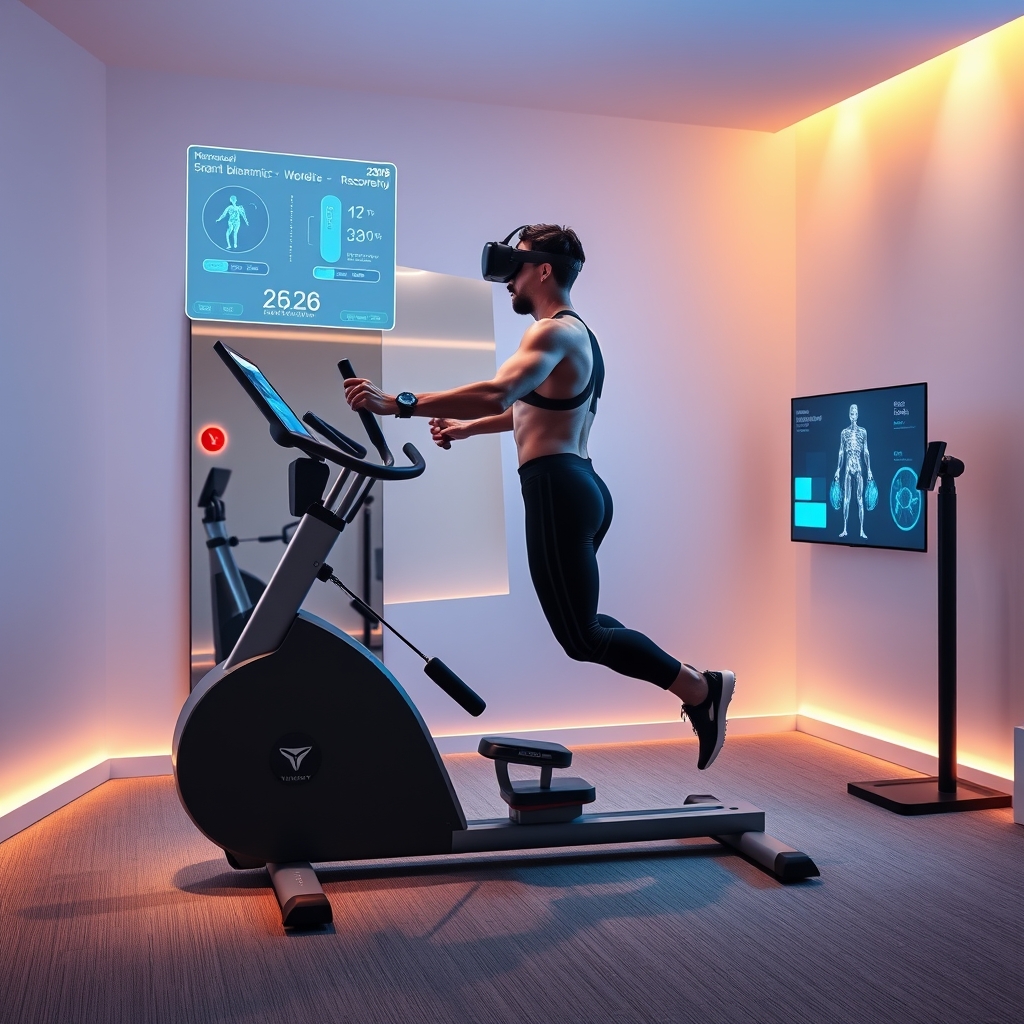
The AI Fitness Revolution: How Smart Home Gyms, Precision Nutrition, and Biohacking Are Redefining Your Transformation in 2026
Imagine stepping into your home gym at 6 AM, where the lights adjust to your circadian rhythm, the temperature is set to optimize muscle recovery, and your AI coach greets you by name—already knowing your sleep quality, stress levels, and yesterday’s workout performance. This isn’t a scene from a sci-fi movie; it’s the new reality of fitness & gym culture in 2026. The era of generic workout plans and one-size-fits-all diets is over. Today, hyper-specific body transformations are powered by artificial intelligence, smart home gym integration, and cutting-edge recovery tech, all working in harmony to sculpt your ideal physique with surgical precision.
The Rise of AI-Powered Personalized Workout Plans
Gone are the days of flipping through fitness magazines or following a celebrity trainer’s generic routine. AI-driven workout systems now analyze your biomechanics, strength imbalances, and even genetic predispositions to craft a personalized workout that evolves with you. These systems don’t just track reps and sets—they monitor muscle activation, fatigue levels, and recovery rates in real time, adjusting intensity and volume on the fly.
For example, if your AI detects that your left glute isn’t firing as efficiently as your right, it might prioritize unilateral movements to correct the imbalance. Or, if your heart rate variability (HRV) suggests you’re overtraining, it could swap a high-intensity session for active recovery. This level of precision nutrition & AI dieting integration ensures that every rep, every set, and every meal is optimized for your unique biology.
How Smart Home Gyms Are Changing the Game
The traditional gym experience—crowded weight rooms, outdated equipment, and the hassle of commuting—is becoming a relic of the past. Smart home gym integration is making elite-level training accessible from the comfort of your living room. Devices like AI-powered resistance trainers, virtual reality (VR) fitness platforms, and connected mirrors with real-time form correction are turning homes into high-tech fitness hubs.
These systems don’t just replicate the gym experience; they enhance it. Imagine a resistance trainer that adjusts tension dynamically based on your strength curve, or a VR headset that transports you to a virtual cycling class in the Alps while your AI coach provides real-time feedback on your pedal stroke. The result? A workout that’s not only more effective but also more engaging and sustainable.
Precision Nutrition: AI’s Role in Crafting Your Perfect Diet
Nutrition has always been the cornerstone of fitness, but until recently, most diets were based on broad generalizations. Today, AI dieting is changing the game by analyzing your metabolic rate, food sensitivities, and even gut microbiome to create a meal plan tailored to your goals. Whether you’re aiming for fat loss, muscle gain, or improved athletic performance, AI ensures that every calorie and macronutrient is optimized for your body.
For instance, if your AI detects that you’re not absorbing iron efficiently, it might suggest pairing your spinach salad with vitamin C-rich bell peppers to enhance absorption. Or, if your blood glucose levels spike after a carb-heavy meal, it could recommend swapping white rice for quinoa. This level of detail extends beyond macros—AI can even predict how your body will respond to different meal timings, helping you avoid energy crashes and optimize recovery.
The Biohacking Edge: Recovery Tech and Beyond
Recovery is where the real magic happens, and recovery tech & biohacking are taking it to the next level. From cryotherapy chambers and red light therapy panels to AI-driven sleep optimization tools, the focus is no longer just on how hard you train but on how intelligently you recover. Wearable devices now track everything from muscle oxygen saturation to cortisol levels, giving you a real-time snapshot of your body’s readiness for the next workout.
For example, if your wearable detects elevated inflammation, your AI might recommend a 20-minute session in a portable infrared sauna or a targeted foam rolling routine. Or, if your sleep data shows poor REM cycles, it could suggest adjusting your bedtime routine or supplementing with magnesium. These interventions aren’t just about feeling better—they’re about ensuring that every workout builds on the last, leading to faster, more sustainable results.
Hyper-Specific Body Transformation: The Future Is Here
The ultimate goal of this fitness revolution isn’t just to get in shape—it’s to achieve a hyper-specific body transformation that aligns with your unique goals. Whether you’re a competitive athlete looking to shave seconds off your race time or a busy professional aiming to build functional strength without sacrificing mobility, AI and smart tech are making it possible to target your transformation with unprecedented precision.
Take, for example, a runner training for a marathon. An AI system could analyze their gait, stride length, and impact forces to design a strength program that reduces injury risk while improving efficiency. Meanwhile, their smart home gym could simulate race-day conditions, adjusting incline and resistance to mimic the course’s terrain. On the nutrition front, their AI dietitian might tweak their carb-loading strategy based on real-time glycogen levels, ensuring they’re fueled for peak performance.
Why This Matters for You
The beauty of this revolution is that it’s not just for elite athletes or tech enthusiasts. The same tools that power professional athletes’ transformations are now available to anyone with a smartphone and a willingness to embrace innovation. The key is to start small—whether it’s integrating a wearable to track recovery, using an AI-powered app to refine your nutrition, or investing in a smart resistance trainer for your home gym.
As these technologies continue to evolve, the line between fitness and personalized wellness will blur even further. The future isn’t about following someone else’s blueprint; it’s about creating your own. And with AI, smart home gyms, and precision nutrition at your fingertips, the only limit is how far you’re willing to push the boundaries of what’s possible.
