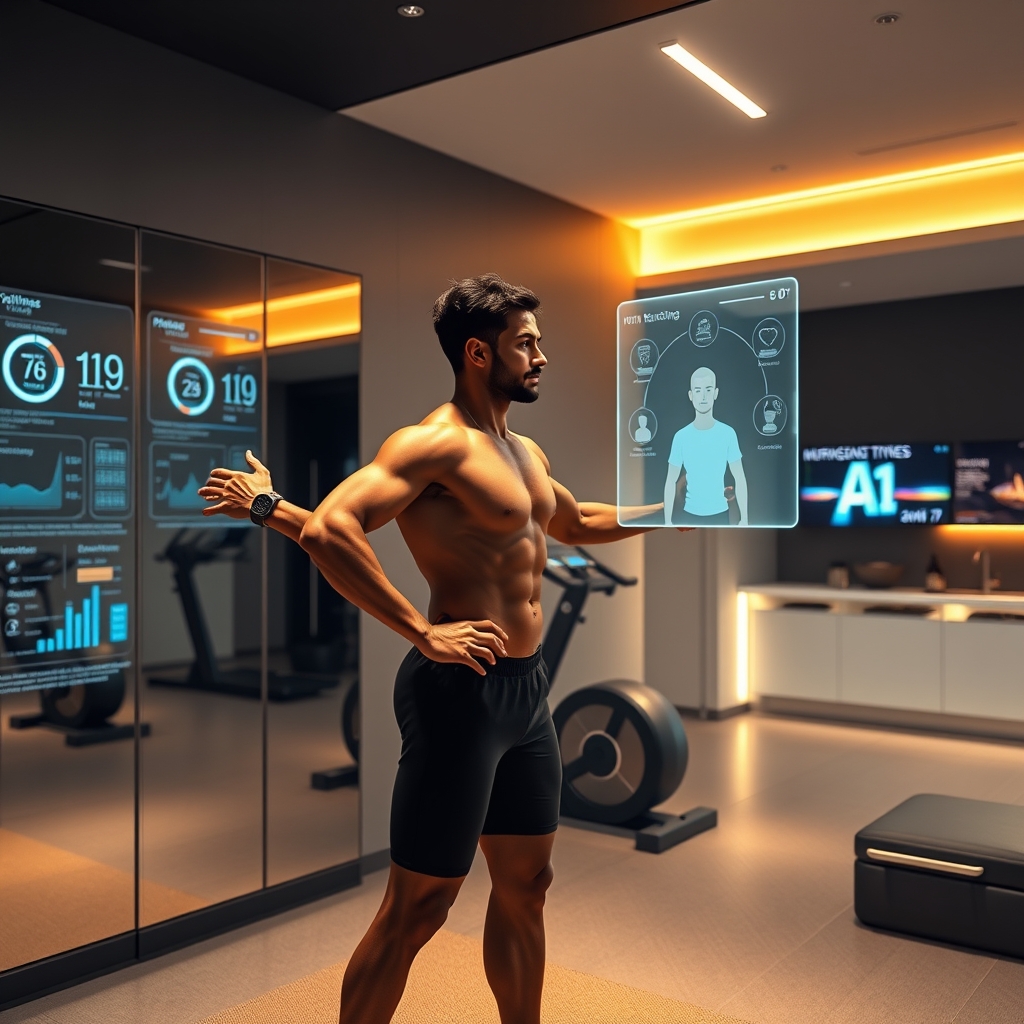
The 2026 Fitness Paradigm: How AI, Smart Home Gyms, and Biohacking Are Unlocking Surgical-Precision Body Transformations
Imagine stepping into a gym where every rep, every meal, and every recovery protocol is tailored exclusively to your DNA, metabolism, and lifestyle. This isn’t a futuristic fantasy—it’s the reality of fitness & gym culture in 2026, where artificial intelligence, smart home gym integration, and biohacking are converging to deliver hyper-specific body transformations with surgical precision. The days of generic workout plans and one-size-fits-all nutrition advice are fading fast, replaced by a data-driven ecosystem that adapts to your body in real time.
The AI-Powered Workout Revolution: Beyond Generic Routines
The shift from cookie-cutter workouts to AI-driven personalization is nothing short of revolutionary. Smart home gyms like Tonal, Mirror, and Peloton are now equipped with machine learning algorithms that analyze your performance, adjust resistance in real time, and even predict when you’re at risk of injury. These systems don’t just track reps—they decode your biomechanics, identifying imbalances and prescribing corrective exercises before they become chronic issues.
But the real magic happens when AI integrates with wearable tech. Devices like WHOOP, Oura Ring, and Apple Watch now feed data into your smart home gym, creating a closed-loop system where your workouts evolve as your body does. Struggling with shoulder mobility? The AI detects it and modifies your next session to include targeted mobility drills. Hitting a plateau in strength gains? The system recalibrates your program, introducing advanced techniques like eccentric overload or blood flow restriction training.
This level of precision nutrition & AI dieting extends beyond the gym, too. AI-powered apps like Nutrino and PlateJoy now sync with your smart kitchen appliances, suggesting meal prep adjustments based on your metabolic response to previous meals. It’s not just about counting macros anymore—it’s about understanding how your body uniquely processes nutrients and optimizing for peak performance.
Smart Home Gym Integration: The Future of Convenience and Customization
The rise of smart home gyms isn’t just about convenience—it’s about creating a seamless, immersive fitness experience that rivals (or surpasses) the best commercial facilities. These systems are no longer standalone pieces of equipment; they’re interconnected hubs that integrate with your entire lifestyle. Imagine your smart mirror displaying your workout metrics while your smart speaker cues up a personalized playlist based on your heart rate variability. Meanwhile, your AI coach adjusts the room’s lighting and temperature to optimize your performance.
But the integration goes deeper. Smart home gyms are now syncing with your calendar, adjusting workout intensity based on your stress levels (measured via HRV) and sleep quality. Had a rough night? Your AI coach might suggest a low-impact yoga session instead of high-intensity interval training. Hosting a dinner party later? The system could recommend a post-workout meal that aligns with your guests’ dietary preferences while still hitting your macros.
This level of smart home gym integration also extends to recovery. Devices like Theragun and Hyperice now communicate with your AI coach, ensuring your post-workout routine is as personalized as your training. The result? Faster recovery, reduced injury risk, and a body that’s always primed for its next challenge.
Biohacking and Recovery Tech: The Secret Weapons for Hyper-Specific Results
If AI and smart home gyms are the engines of the 2026 fitness revolution, recovery tech & biohacking are the fuel. The most elite athletes have long used advanced recovery techniques, but now these tools are accessible to everyday fitness enthusiasts. Cryotherapy chambers, red light therapy panels, and pulsed electromagnetic field (PEMF) devices are becoming staples in home recovery setups, helping users bounce back faster and train harder.
But biohacking isn’t just about high-tech gadgets—it’s about leveraging data to fine-tune every aspect of your physiology. Continuous glucose monitors (CGMs) like Levels and Nutrisense are now commonplace, allowing users to see in real time how their bodies respond to different foods, workouts, and stressors. This data feeds into AI-driven platforms that adjust your diet and training in real time, ensuring you’re always operating at peak efficiency.
Sleep optimization is another critical piece of the puzzle. AI-powered sleep trackers like Eight Sleep and Withings analyze your sleep stages and adjust your bed’s temperature throughout the night to enhance recovery. Combined with smart alarm clocks that wake you during your lightest sleep phase, these tools ensure you’re not just logging hours in bed—you’re maximizing the quality of every minute.
The Psychology of Hyper-Personalized Fitness: Why It Works
The most compelling aspect of this fitness revolution isn’t the technology itself—it’s the psychology behind it. When every aspect of your fitness journey is tailored to your unique needs, motivation skyrockets. There’s no more guessing, no more trial and error. You’re not just following a plan; you’re engaging in a dynamic, evolving process that feels like it was designed just for you.
This level of personalization also fosters a deeper connection to your goals. When your AI coach celebrates your progress with hyper-specific insights—like “Your hamstring mobility improved by 12% this week, reducing your injury risk by 8%”—it creates a sense of accomplishment that generic feedback simply can’t match. It’s no longer about vague goals like “getting in shape”; it’s about measurable, meaningful transformations that align with your body’s unique potential.
From Data to Dominance: The Road Ahead
The future of fitness isn’t just about working harder—it’s about working smarter. With AI-driven workouts, smart home gym integration, and biohacking, the path to your ideal physique is clearer than ever. The tools are here, the data is at your fingertips, and the only limit is how far you’re willing to push the boundaries of what your body can achieve.
So, are you ready to step into the future of fitness? The next evolution of your transformation isn’t just around the corner—it’s already here, waiting for you to unlock it.
