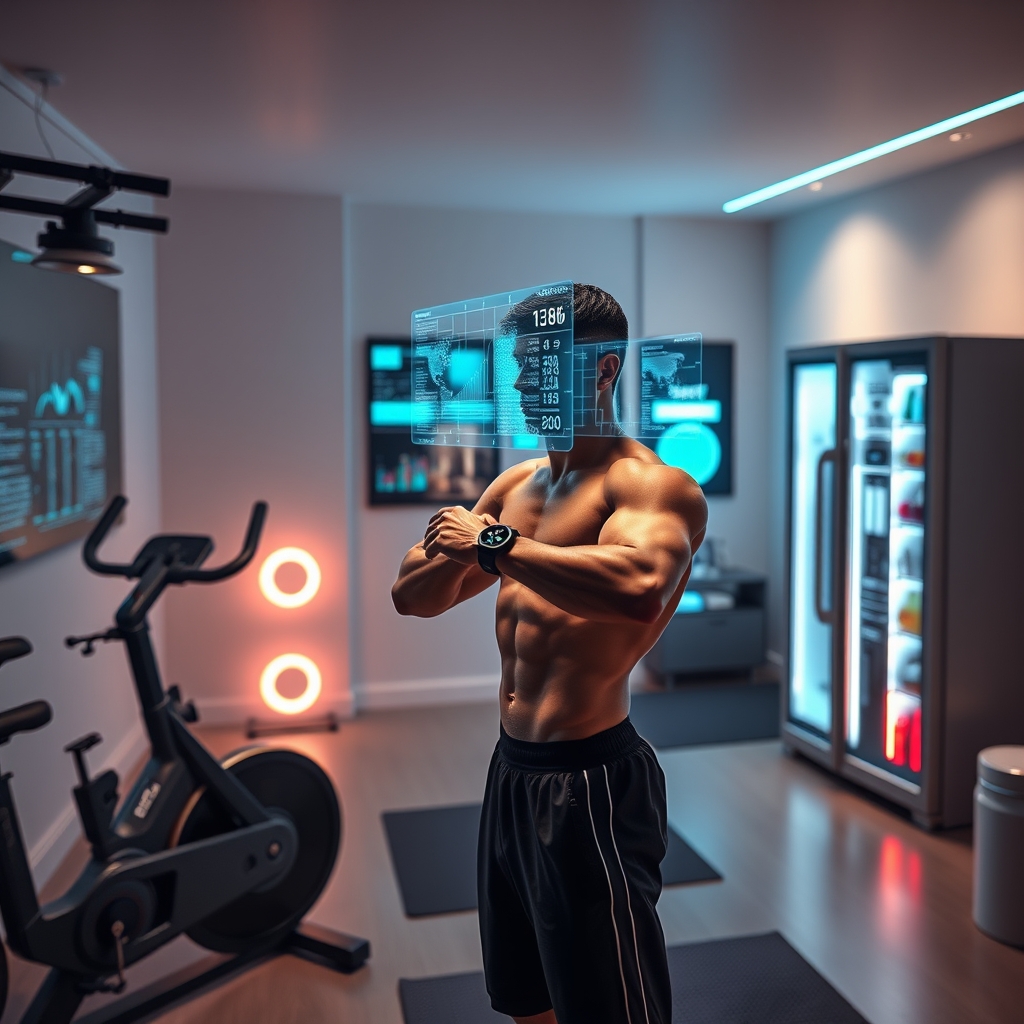
The Data-Driven Physique: How AI, Smart Home Gyms, and Biohacking Are Engineering Your Most Precise Body Yet
Imagine stepping into your home gym and being greeted by a system that knows your body better than you do. It adjusts the resistance on your smart bike before your muscles even register fatigue, recommends a post-workout shake based on your cortisol levels, and tweaks your sleep schedule to optimize recovery—all before you’ve finished your first set. This isn’t a scene from a sci-fi movie; it’s the reality of fitness & gym culture in 2026, where personalized workout AI, smart home gym integration, and precision nutrition & AI dieting are converging to create hyper-specific body transformations unlike anything we’ve seen before.
The AI-Powered Workout: No More Guesswork, Just Results
Gone are the days of flipping through workout plans or relying on generic fitness apps that treat every user the same. Today’s AI-driven workouts analyze your biomechanics, recovery rates, and even your mood to craft routines that adapt in real time. Sensors embedded in your smart home gym equipment track everything from your range of motion to muscle activation patterns, feeding data into algorithms that refine your program daily.
For example, if your AI detects that your left glute isn’t firing as efficiently as your right during squats, it might adjust the weight distribution on your smart barbell or suggest corrective exercises to address the imbalance. This level of hyper-specific body transformation isn’t just about aesthetics—it’s about building a body that moves, performs, and recovers with surgical precision.
But the magic doesn’t stop at the workout. The same AI that designs your training also syncs with your smart home gym integration, ensuring that every rep, set, and rest period is optimized for your unique physiology. Miss a workout? Your AI coach will adjust the following sessions to compensate, ensuring you stay on track without overtraining.
Precision Nutrition: The AI Dietitian in Your Pocket
What if your diet could adapt to your body’s needs as dynamically as your workout? That’s the promise of precision nutrition & AI dieting, where algorithms analyze your metabolic rate, blood glucose levels, and even your gut microbiome to create meal plans that evolve with you. No more rigid macros or one-size-fits-all meal prep—just real-time adjustments based on how your body responds to food.
Wearable tech now tracks post-meal glucose spikes, while AI-powered apps like Nutrino or PlateJoy adjust your caloric intake based on your activity levels, sleep quality, and stress markers. If your cortisol levels are high, your AI might suggest a magnesium-rich snack to support recovery. If your sleep was restless, it could tweak your caffeine intake for the next day. This isn’t just dieting; it’s biohacking your nutrition for peak performance.
And the best part? These systems learn. Over time, your AI dietitian becomes so attuned to your body that it can predict how you’ll respond to certain foods before you even eat them. Craving pizza? Your AI might suggest a high-protein alternative that satisfies your taste buds without derailing your progress.
Recovery Tech: The Unsung Hero of Hyper-Specific Transformations
In the pursuit of the perfect physique, recovery is often the missing link. But in 2026, recovery tech & biohacking are taking center stage, with tools that accelerate healing, reduce inflammation, and optimize performance. From AI-driven compression boots that adjust pressure based on your lactate levels to smart mats that use red light therapy to speed up muscle repair, recovery is no longer an afterthought—it’s a science.
Sleep, the ultimate recovery tool, is also getting an AI upgrade. Smart mattresses and wearables now track your sleep stages, adjusting room temperature and even playing specific sound frequencies to enhance deep sleep. If your AI detects that you’re not hitting enough REM cycles, it might suggest a wind-down routine or adjust your evening nutrition to improve sleep quality.
But the most exciting advancements are in biohacking. Companies like Oura and Whoop are using AI to analyze your heart rate variability (HRV), a key indicator of recovery. If your HRV is low, your AI might recommend a deload week or suggest a cold plunge to reduce inflammation. These tools aren’t just for elite athletes—they’re for anyone serious about sculpting their ideal body with precision.
The Future of Fitness: A Seamless, Data-Driven Ecosystem
The true power of this fitness revolution lies in the integration. Your smart home gym talks to your AI dietitian, which talks to your recovery tech, creating a closed-loop system where every variable is accounted for. Missed a meal? Your AI adjusts your workout intensity. Slept poorly? Your recovery protocol kicks in automatically. This isn’t just fitness—it’s a hyper-personalized transformation engine.
And the best part? It’s accessible. You don’t need a personal trainer, a nutritionist, and a biohacker on speed dial. All you need is a smart home gym setup, a few key wearables, and an AI that learns and adapts with you. The future of fitness isn’t about working harder—it’s about working smarter, with data as your guide.
So, are you ready to step into the gym of the future? The tools are here, the science is proven, and the results are undeniable. Your most precise body isn’t just a possibility—it’s an inevitability when you harness the power of AI, smart tech, and biohacking. The only question left is: What will you transform first?
