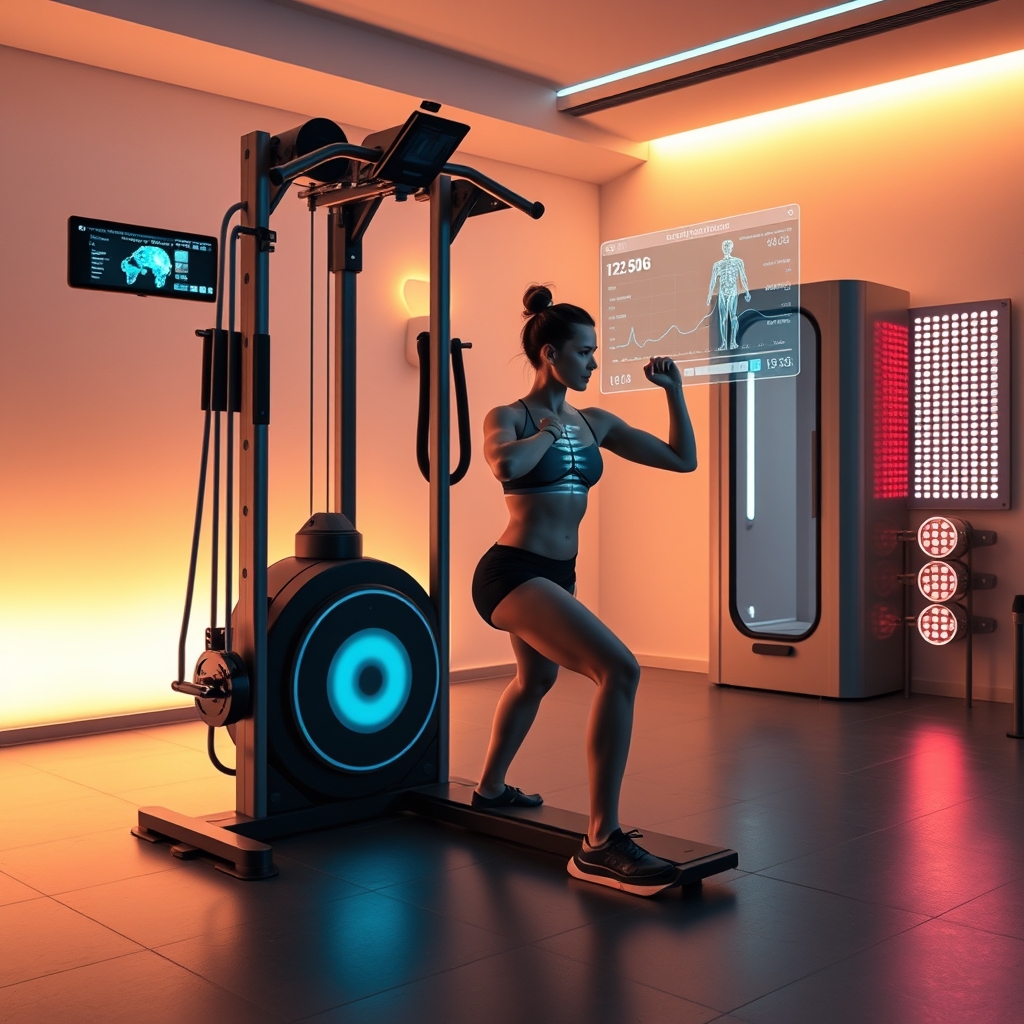
2026’s Fitness Frontier: How AI, Smart Home Gyms, and Biohacking Deliver Your Most Precise Transformation Yet
By 2026, fitness isn’t just about lifting weights or counting macros—it’s about hyper-specific body transformation powered by AI-driven workout personalization, smart home gym integration, and precision nutrition. Whether you’re a beginner or an elite athlete, the tools now exist to tailor every rep, meal, and recovery session to your unique physiology, goals, and lifestyle. In this guide, you’ll learn how to leverage these advancements to build a smarter, more effective fitness routine—without stepping into a crowded gym or guessing what works for your body.
Key Takeaways
- AI-powered workout plans adapt in real-time to your performance, fatigue levels, and progress, eliminating plateaus.
- Smart home gyms now integrate with wearables and AI coaches to optimize form, resistance, and recovery.
- Precision nutrition uses AI to analyze bloodwork, microbiome data, and metabolic responses for diet plans that maximize results.
- Recovery tech and biohacking tools like cryotherapy pods and red-light therapy are now accessible at home, reducing downtime.
How Does AI Personalize Workouts for Your Body in 2026?
Gone are the days of generic workout templates. In 2026, AI-driven fitness platforms like adaptive resistance training algorithms analyze your strength curves, movement patterns, and recovery rates to adjust variables like tempo, load, and rest periods in real-time. For example, if your wearable detects elevated cortisol levels, the AI might shorten your session or swap high-intensity intervals for mobility work—preventing overtraining before it happens.
These systems also account for hyper-specific body transformation goals. Want to increase your vertical jump by 2 inches? AI will prioritize plyometrics, eccentric loading, and neural adaptation drills. Aiming for a sub-10% body fat percentage? It’ll integrate metabolic conditioning and nutrient partitioning strategies into your plan. The result? Workouts that evolve as fast as you do.
What Smart Home Gym Tech Should You Invest In?
The modern home gym is a far cry from a set of dumbbells and a yoga mat. In 2026, smart home gym integration means equipment that communicates with your AI coach, wearables, and even your smart home ecosystem. Key innovations include:
- AI-powered resistance machines (e.g., Tonal, Tempo) that auto-adjust weight based on your fatigue levels and form feedback.
- Motion-capture mirrors (e.g., Mirror, Forme) that correct posture in real-time using computer vision.
- Biometric flooring that tracks balance, force distribution, and gait to prevent injuries.
- Voice-controlled recovery tools like AI-guided percussion guns and compression boots that sync with your training data.
For those with limited space, modular systems like Peloton’s AI Bike+ or NordicTrack’s Vault combine cardio, strength, and recovery into a single, compact unit. The best part? These setups eliminate the need for guesswork—your AI coach handles programming, so you focus on execution.
Can AI Really Optimize Your Diet for Faster Results?
Precision nutrition and AI dieting have moved beyond calorie counting. In 2026, platforms like Nutrino (acquired by Medtronic) and ZOE use continuous glucose monitors (CGMs), microbiome testing, and metabolic panels to create hyper-personalized meal plans. For instance, if your CGM shows a spike after oatmeal, the AI might suggest swapping it for a lower-glycemic alternative like quinoa—even if oatmeal is a “healthy” choice for others.
AI also accounts for nutrient timing. If you’re training for hypertrophy, it’ll prioritize protein synthesis windows post-workout. If endurance is your goal, it’ll optimize carb loading around long sessions. Some systems even integrate with smart kitchen appliances to auto-adjust portion sizes based on your daily activity levels.
How Are Recovery Tech and Biohacking Changing the Game?
Recovery is no longer an afterthought—it’s a data-driven science. In 2026, recovery tech and biohacking tools are more accessible than ever, with at-home solutions like:
- Cryotherapy pods that reduce inflammation and boost recovery by 30% (per Journal of Athletic Training studies).
- Red-light therapy panels that accelerate muscle repair and collagen production.
- AI-powered sleep trackers (e.g., Oura Ring, Whoop) that correlate recovery scores with training adjustments.
- Pulsed electromagnetic field (PEMF) mats that enhance cellular repair and reduce soreness.
For biohackers, advanced wearables like Levels Health and InsideTracker provide real-time feedback on biomarkers like lactate, testosterone, and cortisol. This data allows AI to fine-tune your training and recovery protocols—ensuring you’re always operating at peak performance.
What’s the First Step to Building Your 2026 Fitness System?
Start small. If you’re new to AI-driven fitness, begin with a single tool—like a wearable (e.g., Whoop or Apple Watch) or an AI-powered app (e.g., Freeletics or Vi by LifeBEAM). Track your progress for 4-6 weeks, then layer in smart equipment or precision nutrition as you see results. The key is consistency: these systems work best when they have data to learn from.
For those ready to go all-in, consider a smart home gym setup with integrated AI coaching. Brands like Tonal, Tempo, and Mirror offer all-in-one solutions that combine strength training, cardio, and recovery—with real-time feedback to keep you on track. Pair it with a precision nutrition plan from a platform like ZOE or Nutrino, and you’ll have a 2026-ready fitness ecosystem that adapts to you, not the other way around.
By 2026, fitness isn’t about following trends—it’s about leveraging technology to create a system that’s as unique as your DNA. The tools are here. The question is: are you ready to use them?
