2026 Fitness Unlocked: How AI, Smart Home Gyms, and Precision Tech Build Your Hyper-Specific Body Transformation Plan
By 2026, fitness isn’t just about lifting weights or counting calories—it’s about personalized workout AI, seamless smart home gym integration, and precision nutrition that adapts to your body in real time. If you’re aiming for a hyper-specific body transformation, this guide will show you how AI-driven recovery tech, biohacking tools, and data-backed dieting are reshaping what’s possible. You’ll learn how to leverage these advancements to design a fitness routine that’s as unique as your DNA, with measurable results in weeks—not months.
Key Takeaways
- AI-powered smart home gyms adjust workouts in real time based on fatigue, form, and performance metrics.
- Precision nutrition and AI dieting optimize macros and meal timing for your metabolic profile.
- Recovery tech and biohacking tools (like cryotherapy and red-light therapy) accelerate muscle repair and reduce injury risk.
- Hyper-specific body transformations are now achievable at home with AI-driven coaching and adaptive resistance training.
How Does AI Personalize Workouts for Your Body in 2026?
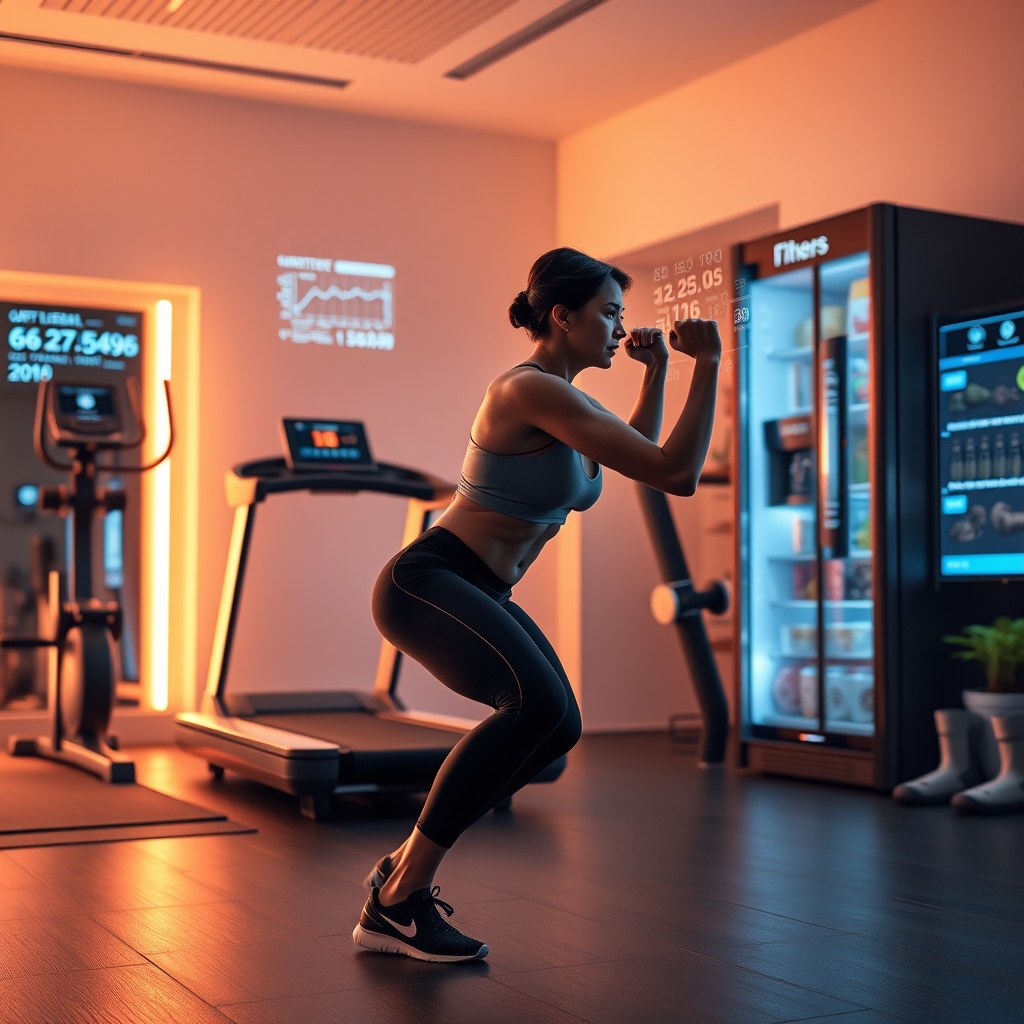
Gone are the days of generic workout plans. In 2026, AI-powered fitness systems analyze your movement patterns, heart rate variability (HRV), and muscle activation to create dynamic routines. For example, if your smart gym detects imbalances in your squat form, it adjusts resistance or suggests corrective exercises in real time. Brands like Tonal and Mirror now integrate computer vision and machine learning to refine technique, ensuring every rep counts.
These systems also factor in recovery data. If your wearable detects elevated cortisol levels, the AI might swap a high-intensity session for mobility work or active recovery. This level of personalization was once exclusive to elite athletes—now it’s accessible in home gyms.
What Role Does Smart Home Gym Integration Play?
Smart home gyms in 2026 are more than just connected equipment—they’re ecosystems. Your treadmill syncs with your smart fridge to suggest post-run hydration, while your resistance trainer communicates with your sleep tracker to optimize workout timing. The result? A seamless experience where every device works together to support your goals.
For instance, Peloton’s latest AI-driven bikes adjust resistance based on your power output and fatigue levels, mimicking outdoor terrain or race conditions. Meanwhile, companies like Tempo use 3D sensors to provide instant feedback on form, reducing injury risk while maximizing efficiency.
Can Precision Nutrition and AI Dieting Really Outperform Traditional Meal Plans?
In 2026, AI dieting goes beyond calorie counting. Platforms like Nutrino (acquired by Medtronic) and InsideTracker analyze blood biomarkers, gut microbiome data, and activity levels to tailor macros, micronutrients, and meal timing. For example, if your glucose monitor shows a spike after carbs, the AI might recommend a higher-fat, lower-glycemic meal plan to stabilize energy.
This approach is backed by research. A 2023 study in Nature Metabolism found that personalized nutrition plans improved metabolic health outcomes by 30% compared to generic diets (Nature Metabolism, 2023). By 2026, these tools are mainstream, with AI adjusting recommendations weekly based on real-time data.
How Does Recovery Tech and Biohacking Fit Into Your Routine?
Recovery is the unsung hero of hyper-specific body transformations. In 2026, biohacking tools like red-light therapy panels, pneumatic compression boots, and AI-driven massage guns are standard in home setups. These devices accelerate muscle repair, reduce inflammation, and improve sleep quality—critical for consistent progress.
For example, WHOOP’s latest recovery algorithm uses HRV, sleep data, and strain metrics to recommend active recovery days or high-intensity sessions. Meanwhile, companies like Theragun now offer AI-powered percussion therapy that adapts intensity based on muscle tension.
What Does a Hyper-Specific Body Transformation Look Like in 2026?
Imagine a 45-year-old professional who wants to lose fat while gaining lean muscle. In 2026, their AI coach designs a 12-week plan combining:
- Smart resistance training: Adaptive weights that adjust based on daily strength levels.
- Precision nutrition: A meal plan optimized for their metabolic rate and genetic predispositions.
- Recovery tech: Nightly red-light therapy and compression boots to reduce soreness.
- Biofeedback: Wearables tracking HRV, sleep, and stress to fine-tune intensity.
The result? A transformation that’s not just visible but sustainable, with AI refining the plan every step of the way. This isn’t futuristic—it’s the new standard for fitness in 2026.
If you’re ready to upgrade your routine, start by integrating one AI-powered tool—whether it’s a smart scale, recovery device, or nutrition app. The key is to let data, not guesswork, drive your progress. Your future self will thank you.
